


Ho Quoc Pagoda, officially Truc Lam Ho Quoc Monastery, is Phu Quoc’s largest Buddhist temple, set on a hillside in Duong To facing the sea, just 10 km from the airport. Entry is free, the grounds open daily from 6 AM to 6 PM, and early morning is the best time for sunrise views and cooler weather. This guide covers the pagoda’s history and architecture, what to wear, how to get there, and nearby beaches to combine with your visit.
QUICK GUIDE
- Hours: 6:00 AM – 6:00 PM daily · Free entry · No reservation needed.
- Location: Duong To commune, southeast Phu Quoc – 10 km from PQC Airport, 22 km from Corona Resort.
- Best time to visit: Sunrise (6–8 AM) for cool weather · Sunset (4:30–6 PM) for golden-hour photography.
- Dress code: Cover shoulders and knees – sleeveless tops, short shorts and miniskirts not permitted.
Introducing Ho Quoc Pagoda (Truc Lam Ho Quoc Monastery)
Ho Quoc Pagoda combines a working Zen monastery with one of the island’s most photographed coastal settings. This section covers the two things travelers ask first: where exactly the temple sits on Phu Quoc, and the history behind its rapid rise into a landmark of Vietnamese Buddhism.
Where is Ho Quoc temple located?
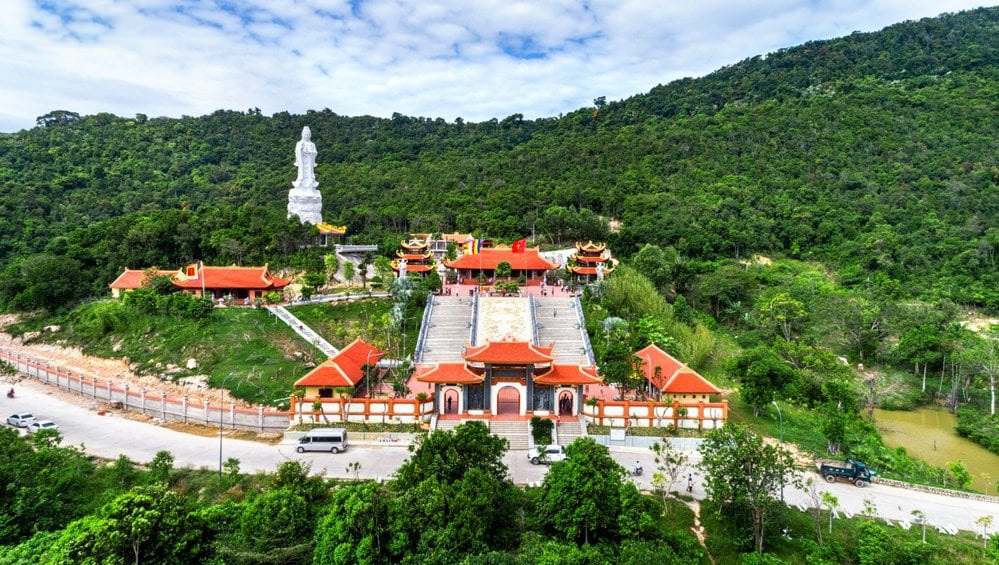
Ho Quoc Pagoda is located in Suoi Lon Hamlet, Duong To Commune, in the southeast of Phu Quoc Island. It sits about 10 kilometers from Phu Quoc International Airport and around 20 kilometers from Duong Dong town center.
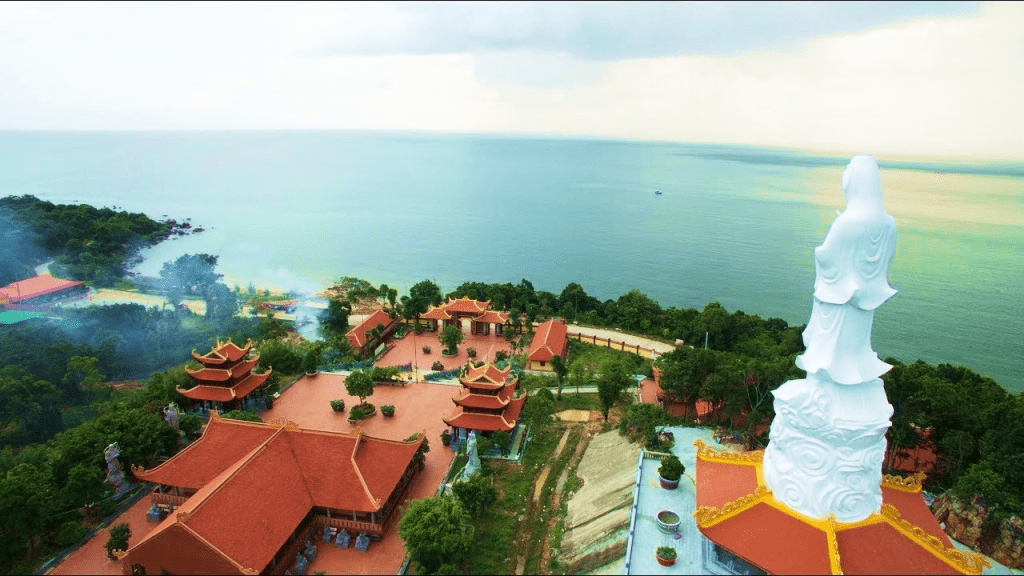
This convenient location makes it easy to combine with other popular southern island attractions such as Sao Beach, Khem Beach, and Phu Quoc Prison. The pagoda is perched on a hillside with the mountain behind and the sea in front — one of the reasons many travelers consider it the most scenic spiritual site on the island.
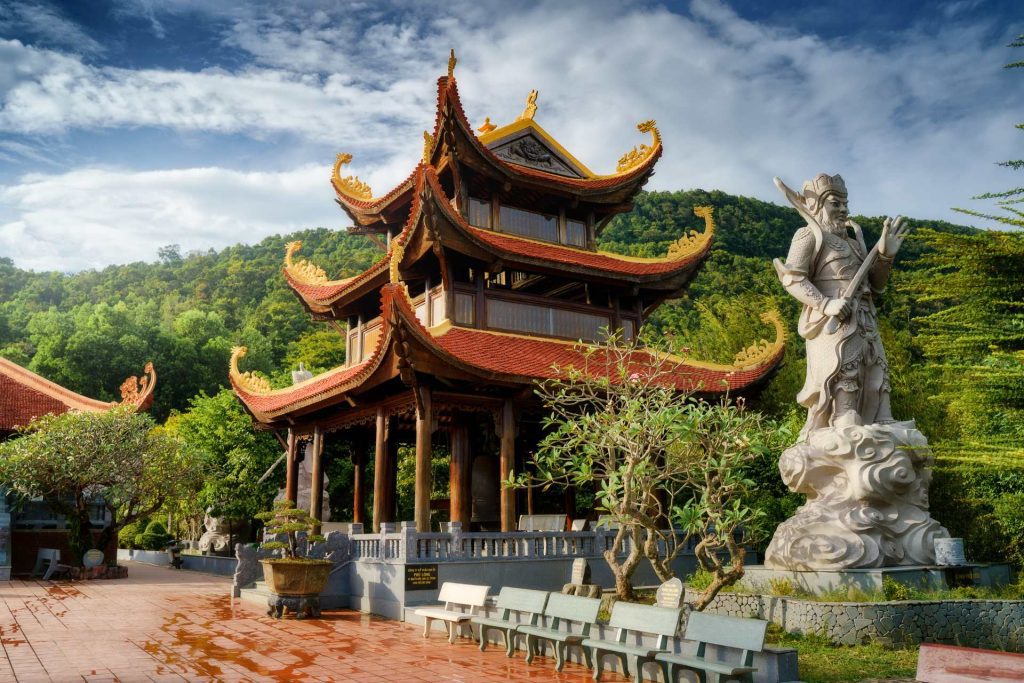
History and the Legacy of the Ho Quoc Temple
The name “Ho Quoc” translates to “protecting the country and safeguarding the borders.” Beyond its role as a tourist attraction, the pagoda holds deep cultural and spiritual meaning for local residents and the broader Vietnamese Buddhist community.
The temple’s development timeline highlights its rapid growth:
- October 14, 2011: Construction officially began within a 110-hectare tourism complex, with the temple occupying around 12% of the total area.
- December 14, 2012: The temple was completed and inaugurated.
- 2013–2014: Additional structures were built, enhancing its architectural appeal and attracting a growing number of visitors each year.
Architecture of Ho Quoc Pagoda
Ho Quoc Pagoda impresses visitors with its peaceful atmosphere, ocean-facing location, and traditional Vietnamese Buddhist architecture. Every section of the complex reflects centuries-old craftsmanship paired with thoughtful spiritual symbolism.
The Tam Quan Gate and Thien Tinh Courtyard
Your journey into Ho Quoc Pagoda begins at the magnificent Tam Quan (Triple Gate). This traditional wooden structure features classic red-tiled roofs characteristic of Ly-Tran dynasty architecture, with intricate carvings of dragons, lotus flowers, and Arhat figures — each detail hand-carved by master craftsmen using precious ironwood.
Passing through the gate, you enter Thien Tinh Courtyard — a serene open space paved with monolithic stone slabs. This transitional area allows visitors to shed worldly distractions before approaching the main worship halls. The harmonious blend of dark precious wood and pale stone creates a visual balance representing yin and yang principles.

The Golden Dragon Staircase and Stone Carvings
The central feature connecting the lower and upper sections of Ho Quoc Pagoda is the Dragon Staircase — 70 steps flanked by intricately carved dragon balustrades. These mythical creatures are rendered in stone with scales, claws, and fierce expressions that symbolize power, protection, and good fortune.
Massive stone bas-reliefs along the stairway depict Buddhist legends and traditional Vietnamese motifs. Despite the modern construction date, the craftsmanship adds a solemn and traditional character to the temple complex. Climbing these stairs becomes a meditative act — each step bringing you physically and spiritually closer to enlightenment.

The Jade Buddha and Avalokiteshvara Statues
Ho Quoc Pagoda houses several remarkable Buddhist statues, with two commanding particular reverence. The Jade Buddha, carved from monolithic green jade, sits in meditation posture with serene features and exquisite detail. Its translucent quality allows light to filter through, creating an ethereal glow during certain times of day.
Even more striking is the towering white marble statue of Lady Buddha (Quan Am/Avalokiteshvara) standing in the monastery courtyard. Facing the ocean, this compassionate bodhisattva watches over local fishermen, protecting them from storms and guiding them safely home. Many visitors come specifically to pray before this statue for protection during sea travel.
The Great Hall (Dai Hung Bao Dien)
The architectural crown jewel of Ho Quoc Pagoda is the Great Hall. This magnificent structure employs classic wooden architecture using ancient mortise-and-tenon joinery, inspired by traditional Ly-Tran dynasty design principles. Massive ironwood pillars support a multi-tiered roof that curves gracefully upward.
Interior walls feature detailed carvings of lotus flowers (representing purity) and clouds (representing impermanence) — core Buddhist concepts expressed through visual art. The hall’s acoustic design allows chanting to resonate perfectly, creating a powerful sonic atmosphere during ceremonies. Even during quiet hours, the space exudes profound spiritual energy.
Best things to do at Ho Quoc Pagoda
To make the most of your visit to Ho Quoc Pagoda, here are the top experiences you should not miss — from spiritual worship to breathtaking scenic views.
Worship for peace, health, career
Leaving behind the hustle and bustle of daily life, visitors to Phu Quoc can find a deep sense of calm and renewal at Ho Quoc Temple. Surrounded by mountains and sea, this peaceful sanctuary offers the perfect setting to reconnect with oneself while paying respect to Buddha.
Here, locals and travelers alike come to pray for peace, good health, happiness, prosperity, and success. The serene atmosphere and natural beauty make every moment of prayer feel deeply meaningful.

Admire the scenery views from Ho Quoc Pagoda
Among nearly 15,000 temples across Vietnam, Ho Quoc Pagoda stands out for its exceptional location. Backed by a majestic mountain range and facing the vast ocean, the temple embodies a harmonious balance between nature and spirituality.
From the main hall, visitors can take in panoramic views of the endless blue sea stretching to the horizon. The combination of fresh coastal air and breathtaking scenery allows travelers to truly connect with the immense beauty of nature — an experience that photographs alone cannot capture.

Visit many attractive places near Ho Quoc Pagoda
Located near Ho Quoc Pagoda are several of Phu Quoc’s most remarkable attractions, making it easy to combine spiritual exploration with sightseeing. Some highlights you should not miss:
- Khem Beach: Often considered one of the most beautiful beaches on the island, Khem Beach features crystal-clear water where you can even see the seabed. It is ideal for snorkeling, swimming, or canoeing.
- Sao Beach: Famous for its soft white sand and calm, gentle waves, Sao Beach is perfect for relaxation and is especially popular among both local and international travelers.
- Ham Ninh Fishing Village: Nestled at the foot of Ham Ninh Mountain, this traditional village is well known for its fresh seafood and authentic dining experiences by the sea.
- Phu Quoc Prison: Often described as a “living museum,” this historical site offers powerful insights into Vietnam’s past and the resilience of its people during wartime.
Best time to visit Ho Quoc Pagoda
Planning the right time for your visit to Ho Quoc Pagoda can make all the difference. Here is what you need to know about seasons, ideal hours, and how to reach this magnificent coastal temple.
The Ideal Time to Visit
The best months to visit Phu Quoc overall are November through April (dry season). Within any day, the two recommended visiting windows are:
- Dry Season (November – April): Clear skies ensure excellent photography conditions, calm seas create stunning ocean backdrops, and comfortable temperatures make climbing the 70-step Dragon Staircase pleasant rather than exhausting.
- Best Hours: Early morning (5:30–7:00 AM) captures magical sunrise light with fewer crowds. Late afternoon (4:00–6:00 PM) offers softer golden-hour lighting and refreshing ocean breezes. The monastery closes at 6:00 PM, so late visitors should arrive by 5:00 PM.
How to get to Ho Quoc Pagoda
Getting to Ho Quoc Temple is relatively straightforward, with several routes depending on your starting point:
From Phu Quoc International Airport: Head along Phu Quoc Highway, then turn right onto Nguyen Van Cu Road. Continue for approximately 9 km, make a U-turn at the curve, and drive for another 3 km to reach the temple.
From Duong Dong Town: Start from Cach Mang Street, go about 200 meters, then turn onto Duong Dong Street (DT45). Continue straight to TL47 Road for around 8 km. At the roundabout, take the second exit and continue for another 11 km past Montana Resort to arrive at the temple.
From the northern area of Phu Quoc: Travel toward Cua Can for about 20 km, then turn onto TL47 Road. Continue for 8 km to reach a roundabout, take the second exit onto DT46 Road, and drive approximately 12.5 km to the temple.
Tips for a Complete Visit
When visiting Ho Quoc Temple, keep these practical tips in mind for a smooth and respectful experience:
- Speak quietly and respect the sacred space at all times
- Wear modest clothing that covers your shoulders and knees
- Visit during early morning or late afternoon for the best weather and views
- Bring sunscreen, a hat, or an umbrella if visiting around midday
- Use the available parking area near the entrance
- Do not litter — help preserve this beautiful spiritual site
- Book your accommodation in advance, especially during peak season
Why stay at Corona Resort & Casino Phu Quoc? Located just 22 km away (about 35–45 minutes by car), Corona Resort & Casino Phu Quoc is one of the island’s premier destinations — recognized as the “World’s Best Casino Entertainment Venue 2022” by the World Casino Awards and home to Vietnam’s first legal casino where Vietnamese citizens can play. The resort offers luxurious beachfront rooms, world-class dining, spa services, golf, and a full range of entertainment for an unforgettable Phu Quoc holiday.
Frequently Asked Questions
What are Ho Quoc Pagoda opening hours?
Ho Quoc Pagoda is open daily from 6:00 AM to 6:00 PM. Visitors should arrive earlier if they want enough time to explore the entire temple complex and enjoy the panoramic sea views from the main hall.
Is there an entrance fee at Ho Quoc Pagoda?
No, entrance to Ho Quoc Pagoda is completely free. However, visitors should prepare some cash for parking fees, offerings, or small personal expenses during the visit.
Is there a dress code at Ho Quoc Pagoda?
Yes, as a sacred Buddhist site, Ho Quoc Pagoda requires modest clothing. Visitors should wear outfits that cover shoulders and knees. Sleeveless tops, short shorts, and miniskirts are not permitted inside the temple grounds.
When is the Ho Quoc lantern festival?
Ho Quoc hosts two annual lantern festivals: Tet Eve (January or February depending on the lunar calendar) and Vu Lan Festival on the 15th day of the 7th lunar month. Vu Lan 2026 falls on Saturday, August 22. Arrive by 5:00 PM to secure a viewing spot — the lantern release begins around 6:30 PM at sunset.
What should I wear to Ho Quoc Pagoda?
Wear modest, respectful clothing that covers your shoulders and knees. Avoid loud outfits, sleeveless tops, or very short clothing. Comfortable walking shoes are also recommended since the temple involves stair-climbing.
How long should I spend at Ho Quoc Pagoda?
Most visitors spend around 1–2 hours exploring the main gate, courtyard, worship halls, statues, and ocean viewpoints. If you plan to attend a ceremony or spend time in meditation, allow up to 3 hours.
How far is Ho Quoc Pagoda from Corona Resort?
Ho Quoc Pagoda is about 22 kilometers from Corona Resort & Casino Phu Quoc. Travel time is usually around 35–45 minutes by car, depending on traffic and the route you choose.
We hope this comprehensive guide about Ho Quoc Pagoda has given you everything you need to plan a memorable visit to this breathtaking spiritual site on Phu Quoc Island.
While exploring the pearl island, be sure to visit Corona Resort & Casino Phu Quoc to enjoy world-class entertainment, luxurious beachfront accommodation, and an extraordinary resort experience. We are always ready to make your time on Phu Quoc truly exceptional and unforgettable!
Contact Corona Resort & Casino:
- Location: Bai Dai Area, Phu Quoc, An Giang, Vietnam
- Phone: +84 297 222 8888
- Email: mkt.management@casinocorona.vn
- Website: https://casinocorona.vn/en/