


Imagine standing on a mountainside temple, gazing out at the endless turquoise expanse of the Gulf of Thailand, while the scent of incense drifts through ancient wooden halls. This isn’t a scene from a meditation retreat brochure – it’s the everyday reality at Ho Quoc Pagoda, Phu Quoc’s most magnificent spiritual landmark.
Between enjoying world-class entertainment at Corona Resort & Casino Phu Quoc and exploring the island’s pristine beaches, a visit to Ho Quoc Pagoda offers a profound cultural experience. This majestic monastery combines stunning Ly-Tran dynasty architecture with breathtaking ocean views, creating a sanctuary that soothes both soul and senses. Let’s explore everything you need to know about this extraordinary destination for your 2026 journey.
Introduction to Ho Quoc Pagoda
Where is Ho Quoc temple located?
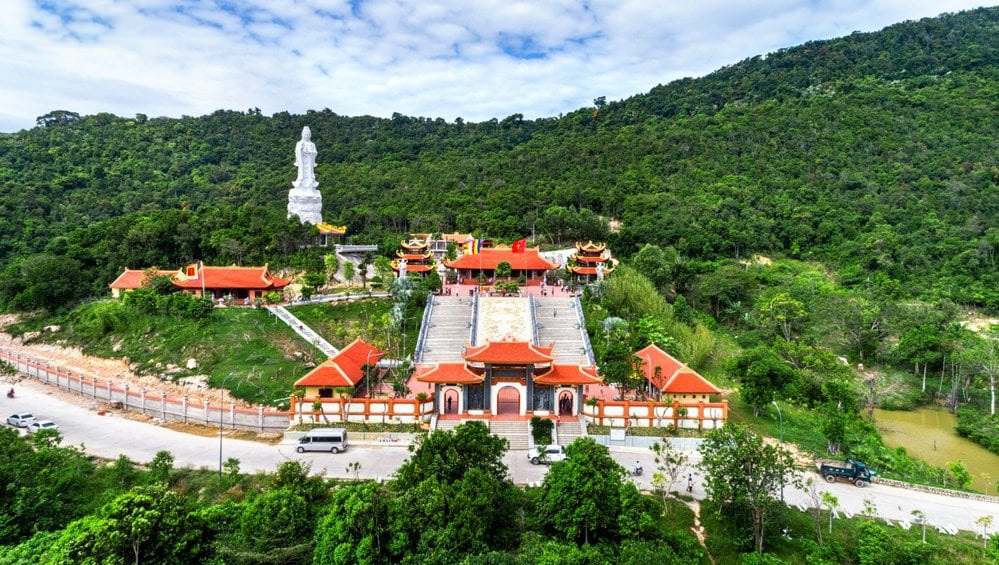
Ho Quoc Pagoda sits in Suoi Lon Hamlet, Duong To Commune, approximately 20 kilometers south of Duong Dong town center and just 10 kilometers from Phu Quoc International Airport. The monastery occupies a spectacular hillside position, nestled against Dang Cuu Mountain while commanding panoramic views of the vast ocean.
This “Back to Mountain, Facing the Sea” feng shui position creates extraordinary energy flow – mountains provide protective strength while the ocean offers boundless opportunity and prosperity. Standing in the courtyard, you’ll immediately understand why ancient architects considered this sacred geography.
History and the Legacy of the Truc Lam Zen Sect
Ho Quoc Pagoda represents relatively recent construction – groundbreaking occurred in October 2011, and the monastery officially opened in December 2012 after just 14 months of intensive building. Despite its youth, the temple has quickly become Phu Quoc’s most significant spiritual center.
The project required investment exceeding 100 billion VND, funded primarily through Buddhist community donations. This remarkable generosity reflects the deep spiritual devotion of Vietnamese Buddhists and their desire to establish a major religious center on the Pearl Island.
Spanning over 110 hectares (though the temple buildings occupy about 12 hectares, with the remainder being protected forest), Ho Quoc Pagoda claims the title of largest Buddhist complex in the Mekong Delta. The monastery belongs to the Truc Lam Yen Tử Zen sect, founded by King Tran Nhan Tong in the 13th century – Vietnam’s only homegrown Buddhist school.
This connection to uniquely Vietnamese Buddhism makes Ho Quoc Pagoda more than just a temple – it’s a living repository of national spiritual identity, preserving meditation practices and philosophical teachings that distinguish Vietnamese Buddhism from other Asian traditions.
Exploring the Distinctive Architecture
The Tam Quan Gate and Thien Tinh Courtyard
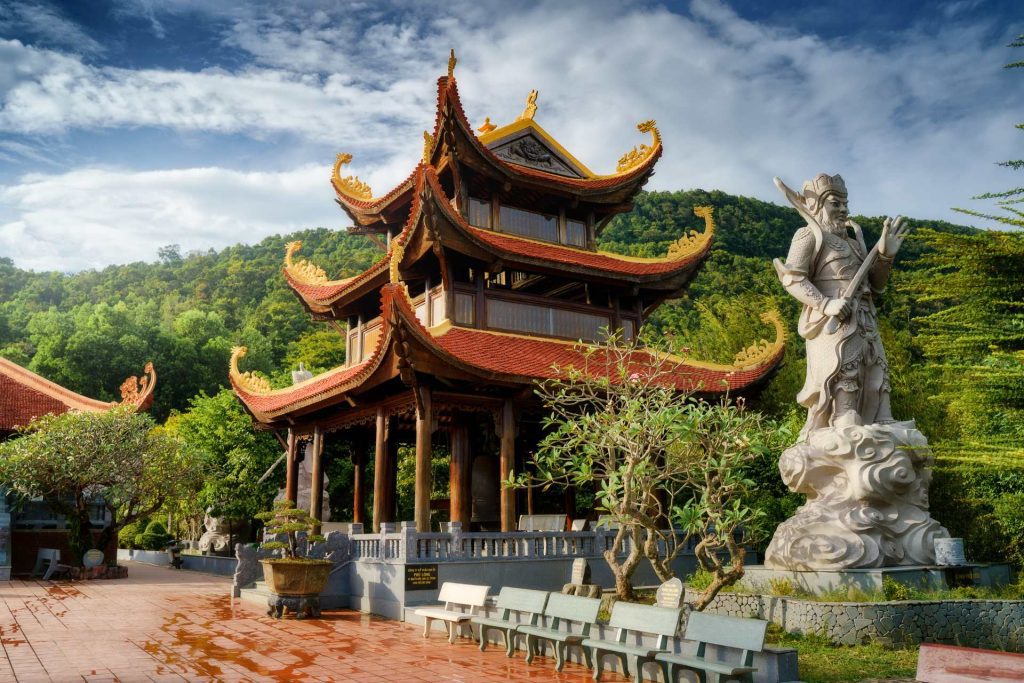
Your journey into Ho Quoc Pagoda begins at the magnificent Tam Quan (Triple Gate), a traditional wooden structure featuring classic red-tiled roofs characteristic of Ly-Tran dynasty architecture. Intricate carvings of dragons, lotus flowers, and Arhat figures cover the gate’s surfaces – each detail hand-carved by master craftsmen using precious ironwood.
Passing through the gate, you enter Thien Tinh Courtyard, a serene open space paved with monolithic stone slabs. This transitional area allows visitors to shed worldly distractions before approaching the main worship halls. The harmonious blend of dark precious wood and pale stone creates visual balance representing yin and yang principles.

The Golden Dragon Staircase and Stone Carvings
The central feature connecting lower and upper sections of Ho Quoc Pagoda is the Dragon Staircase – 70 steps flanked by intricately carved dragon balustrades. These mythical creatures, rendered in stone with scales, claws, and fierce expressions perfectly detailed, symbolize power, protection, and good fortune.
Massive stone bas-reliefs along the stairway depict Buddhist legends and traditional Vietnamese motifs. The craftsmanship rivals anything found at Vietnam’s ancient temples, despite the modern construction date. Climbing these stairs becomes a meditative act – each step bringing you physically and spiritually closer to enlightenment.

The Jade Buddha and Avalokiteshvara Statues
Ho Quoc Pagoda houses several remarkable Buddhist statues, with two commanding particular reverence. The Jade Buddha, carved from monolithic green jade, sits in meditation posture with serene features and exquisite detail. The statue’s translucent quality allows light to filter through, creating an ethereal glow during certain times of day.
Even more striking is the towering white marble statue of Lady Buddha (Quan Am/Avalokiteshvara) standing in the monastery courtyard. Facing the ocean, this compassionate bodhisattva watches over local fishermen, protecting them from storms and guiding them safely home. Many visitors come specifically to pray before this statue for protection during sea travel.

The Great Hall (Dai Hung Bao Dien)
The architectural crown jewel of Ho Quoc Pagoda is undoubtedly the Great Hall. This magnificent structure employs classic wooden architecture using ancient mortise-and-tenon joinery – no nails required. Massive ironwood pillars support a multi-tiered roof that curves gracefully upward, exactly replicating Ly-Tran dynasty design principles.
Interior walls feature detailed carvings of lotus flowers (representing purity) and clouds (representing impermanence) – core Buddhist concepts expressed through visual art. The hall’s acoustic design allows chanting to resonate perfectly, creating powerful sonic atmosphere during ceremonies. Even if you visit during quiet hours, the space exudes profound spiritual energy.
Must-Try Experiences at Ho Quoc Pagoda
Spiritual Worship and Peace-Seeking
The primary purpose of Ho Quoc Pagoda remains active worship, and visitors are welcome to participate respectfully. Light incense sticks, bow before Buddha statues, and offer silent prayers for health, family happiness, career success, or whatever blessings you seek.
Even non-religious visitors report feeling profound peace within the monastery grounds. The combination of ocean breezes, incense fragrance, mountain backdrop, and reverent atmosphere creates tangible tranquility. Many travelers describe Ho Quoc Pagoda as their most emotionally moving Phu Quoc experience – unexpected spiritual depth on an island famous for beaches.

Witnessing the Best Sunrise in Phu Quoc
Ho Quoc Pagoda faces directly east, making it Phu Quoc’s premier sunrise viewing location. Arrive around 5:30-6:00 AM to watch the sun emerge from the ocean horizon, painting sky and sea in spectacular oranges, pinks, and golds.
The monastery opens at 6:00 AM, so early risers should arrive just before opening to catch the full sunrise spectacle. Photographers particularly treasure this golden hour – the interplay of ancient architecture, natural light, and ocean backdrop creates stunning imagery. The spiritual significance of greeting a new day at this sacred place adds meaningful dimension to simple sunrise watching.

Panoramic Island Views
From the highest courtyard of Ho Quoc Pagoda, visitors enjoy sweeping 180-degree views encompassing lush mountain forests behind and endless ocean ahead. On clear days, visibility extends for kilometers – you can spot distant fishing boats, neighboring islands, and the curved coastline stretching north and south.
This elevated perspective helps you appreciate Phu Quoc’s geography – how the mountainous interior gives way to coastal plains, how development clusters in certain areas while pristine forest dominates others. The contrast between verdant green mountains and deep blue sea creates postcard-perfect scenes from multiple vantage points throughout Ho Quoc Pagoda grounds.
Practical Travel Guide for 2026
The Ideal Time to Visit
Dry Season (November – April): This period delivers the best weather for visiting Ho Quoc Pagoda. Clear skies ensure excellent photography conditions, calm seas create stunning ocean backdrops, and comfortable temperatures make climbing stairs pleasant rather than exhausting.
Best Hours: Early morning (5:30-7:00 AM) captures magical sunrise light and cooler temperatures with fewer crowds. Late afternoon (4:00-6:00 PM) offers softer golden-hour lighting and ocean breezes that feel refreshing after hot midday hours. The monastery closes at 6:00 PM, so late visitors should arrive by 5:00 PM to have adequate exploration time.
How to Get There
By Motorbike: Adventure seekers should rent motorbikes (150,000-200,000 VND/day) and enjoy the scenic 20-kilometer coastal road from Duong Dong. The route has been fully paved and upgraded as of 2026, making the journey smooth and safe. Travel time: approximately 35-40 minutes.
By Car/Taxi: Families or those uncomfortable with motorbikes should book private cars or taxis. Expect to pay 300,000-400,000 VND for round-trip transport from Duong Dong including waiting time. The mountain access road to Ho Quoc Pagoda features gentle grades and good pavement – no challenging driving conditions.
Important Etiquette and Notes
Dress Code: This is crucial – Ho Quoc Pagoda is an active monastery, and modest dress is mandatory. Shoulders and knees must be covered (no tank tops, shorts, or short skirts). The monastery provides free sarongs at the entrance for unprepared visitors, but arriving properly dressed shows greater respect.
Conduct Guidelines: Maintain quiet voices within temple grounds. Photography is permitted in most areas, but avoid photographing monks without permission and never photograph inside the main worship hall during ceremonies. Remove shoes before entering any building housing Buddha statues.
Free Entry: Ho Quoc Pagoda charges no entrance fee, though donation boxes are available for those wishing to support the monastery’s upkeep and charitable works.
Nearby Attractions and Recommended Accommodations
Attractions Near Ho Quoc Pagoda
Sao Beach & Khem Beach: Just 10-15 minutes south of Ho Quoc Pagoda, these two beaches rank among Phu Quoc’s most beautiful. Crystal-clear turquoise water, powder-soft white sand, and swaying palm trees create perfect tropical beach scenes. Combine spiritual morning at the pagoda with beach afternoon for balanced day.
Phu Quoc Prison (Coconut Tree Prison): Located on the same southern route, this historical site documents the harsh conditions political prisoners endured during the Vietnam War. The sobering museum provides important historical context for understanding modern Vietnam.

Luxury & Smart Stay Options
To conveniently explore both North and South Phu Quoc, including Ho Quoc Pagoda, consider these excellent accommodations:
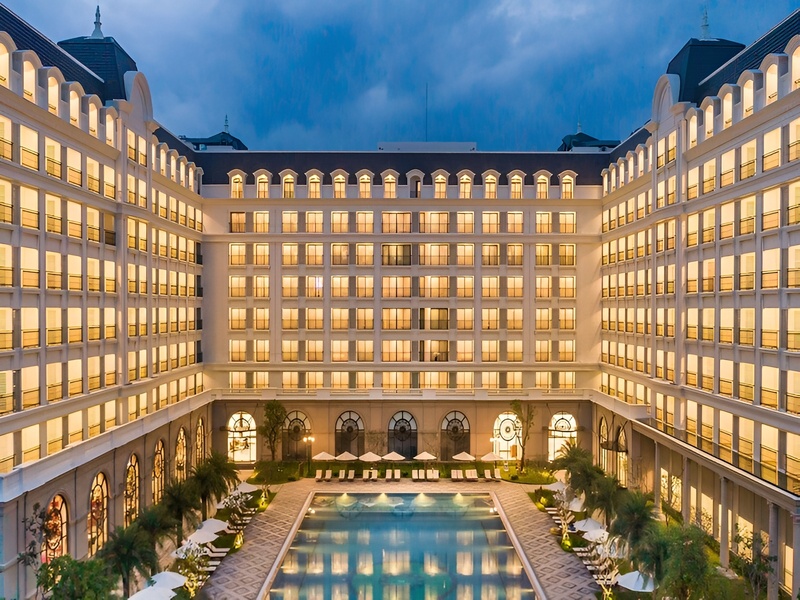
Wyndham Grand Phu Quoc (5★): This grand 1,399-room complex offers sophisticated European-inspired architecture within the vibrant Corona entertainment ecosystem. Multiple pools, beachfront dining, and full-service spa create luxurious base for pagoda visits and beach explorations.

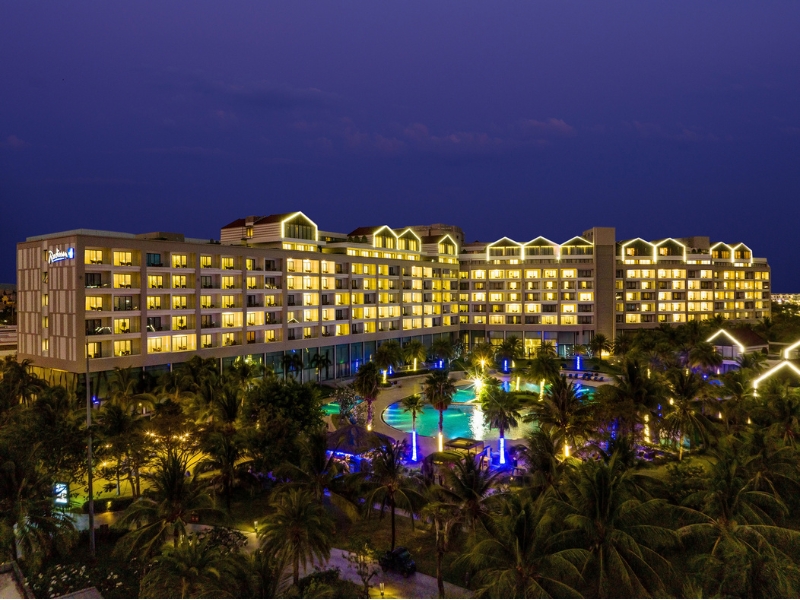
Radisson Blu Resort Phu Quoc (5★): Contemporary luxury defines this 514-room beachfront sanctuary. Modern design emphasizes ocean views and natural light, while extensive amenities cater to both relaxation and activity. The central location makes Ho Quoc Pagoda easily accessible.
Wyndham Garden Grandworld Phu Quoc (4★): Positioned in Grand World’s heart, this 921-room hotel features 952m² swimming pool, Mini Water Park, and Kids’ Club. After spiritual mornings at Ho Quoc Pagoda, return to lively evening entertainment, diverse dining, and comfortable modern rooms.

VinHolidays Fiesta Phu Quoc (3★): The “smart stay” option delivers excellent value across 687 contemporary rooms. While officially three-star, amenities rival many four-star properties. The strategic Grand World location provides budget-conscious travelers premium access to island attractions.
Conclusion: A Sacred Sanctuary for Your 2026 Journey
Ho Quoc Pagoda represents the perfect synthesis of architectural mastery, spiritual depth, and natural beauty. Whether you’re a devoted Buddhist seeking meditation space, a culture enthusiast appreciating traditional craftsmanship, or a traveler wanting to understand Vietnam’s spiritual heritage, this magnificent Phu Quoc pagoda delivers profound experiences.
The combination of ancient-style architecture (despite modern construction), spectacular coastal location, and genuine spiritual atmosphere makes this Phu Quoc pagoda essential to any complete island itinerary. It offers dimension beyond beaches and entertainment – a chance to connect with something deeper and more lasting.
Ready to Experience Phu Quoc’s Spiritual Heart?
After your contemplative visit to this remarkable Phu Quoc pagoda, return to modern luxury and entertainment at Corona Resort & Casino Phu Quoc. With over 3,000 five-star accommodations managed by world-renowned brands (Radisson Blu, Wyndham Grand, Wyndham Garden, VinHolidays Fiesta), you’ll enjoy the perfect balance of spiritual exploration and premium comfort.
From sunrise prayers at Ho Quoc Pagoda to sunset cocktails overlooking the Gulf of Thailand, from cultural immersion to casino excitement, from pristine beach relaxation to Grand World entertainment – Corona Resort & Casino Phu Quoc provides the ideal gateway for experiencing every facet of the Pearl Island.
Book your 2026 Phu Quoc journey today and include this sacred Phu Quoc pagoda in your itinerary. This spiritual sanctuary awaits to share its peace, beauty, and blessings with you.
Contact Corona Resort & Casino:
- Location: Bai Dai Area, Phu Quoc, An Giang, Vietnam
- Phone: +84 297 222 8888
- Email: mkt.management@casinocorona.vn
- Website: https://casinocorona.vn/en/