


Phu Quoc Prison is a major wartime historical site in the south of Phu Quoc Island. For travelers researching a visit, this guide covers the site’s history, key exhibits, opening hours, directions and practical tips for a respectful visit.
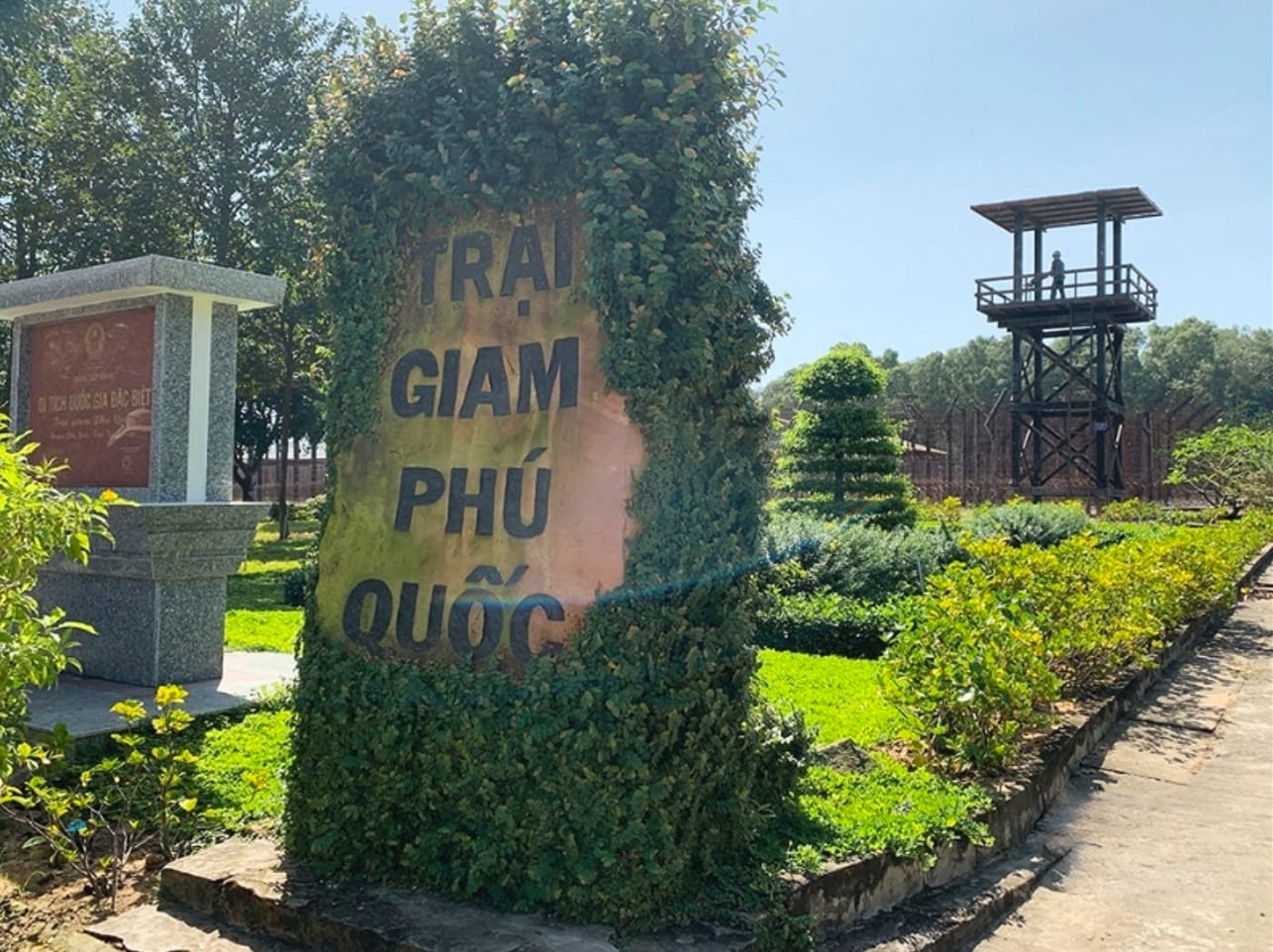
Overview of Phu Quoc Prison
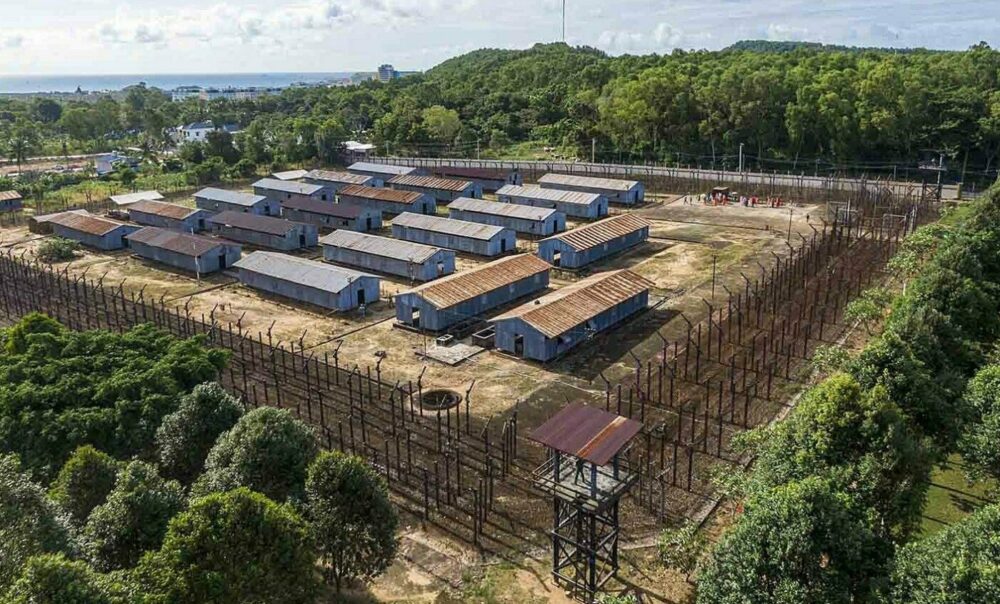
Phu Quoc Prison — also widely known as Phu Quoc Coconut Tree Prison (Nhà Tù Phú Quốc) — is located in the southern part of the island at 350 Nguyen Van Cu Street, An Thoi Ward. Spanning over 40 hectares and divided into four main zones (A, B, C, and D), it remains the largest wartime prison site in Vietnam open to visitors.
Phu Quoc Prison was recognized as a national historical relic in the 1990s. It was later designated a Special National Historical Relic under Decision No. 2408/QD-TTg dated December 31, 2014. Thousands of visitors pass through each year, including former soldiers, historians, school groups, and international travelers seeking to understand Vietnam’s wartime experience from the perspective of those who suffered within these walls.
Key Facts at a Glance
| Detail | Information |
|---|---|
| Official name | Phu Quoc Coconut Tree Prison |
| Address | 350 Nguyen Van Cu Street, An Thoi area, Phu Quoc Special Zone, An Giang Province, Vietnam |
| Total area | Over 40 hectares, 4 zones (A, B, C, D) |
| Heritage status | Special National Historical Relic (Ministry of Culture, 1995) |
| Peak prisoner capacity | Up to 32,000 (Vietnam War period) |
| Opening hours | 8:30–11:30 AM / 1:30–5:00 PM daily |
| Admission | Free |
History of Phu Quoc Prison
Phu Quoc Prison during French colonial rule
Phu Quoc Prison was first established in 1946, when French forces occupied the island during the First Indochina War. At that time, the complex covered approximately 40 hectares and was divided into four sections — A, B, C, and D — making it one of the largest detention facilities in Southeast Asia at the time.
The facility was heavily fortified: multiple layers of barbed wire surrounded the perimeter, guard towers provided constant surveillance, and floodlights kept the compound illuminated through the night. By April 1954, the prison held approximately 14,000 inmates, the vast majority of them male revolutionary fighters.
During this period, at least 99 Vietnamese soldiers lost their lives due to the brutal conditions, inadequate medical care, starvation, and systematic abuse inflicted by colonial authorities.
Phu Quoc’s Coconut Tree Prison during the Vietnam War
In 1955, following the handover to the government of the Republic of Vietnam, the complex was expanded with an additional 4-hectare facility and formally renamed Phu Quoc Coconut Tree Prison. Separate detention areas were established for men, women, and elderly prisoners.
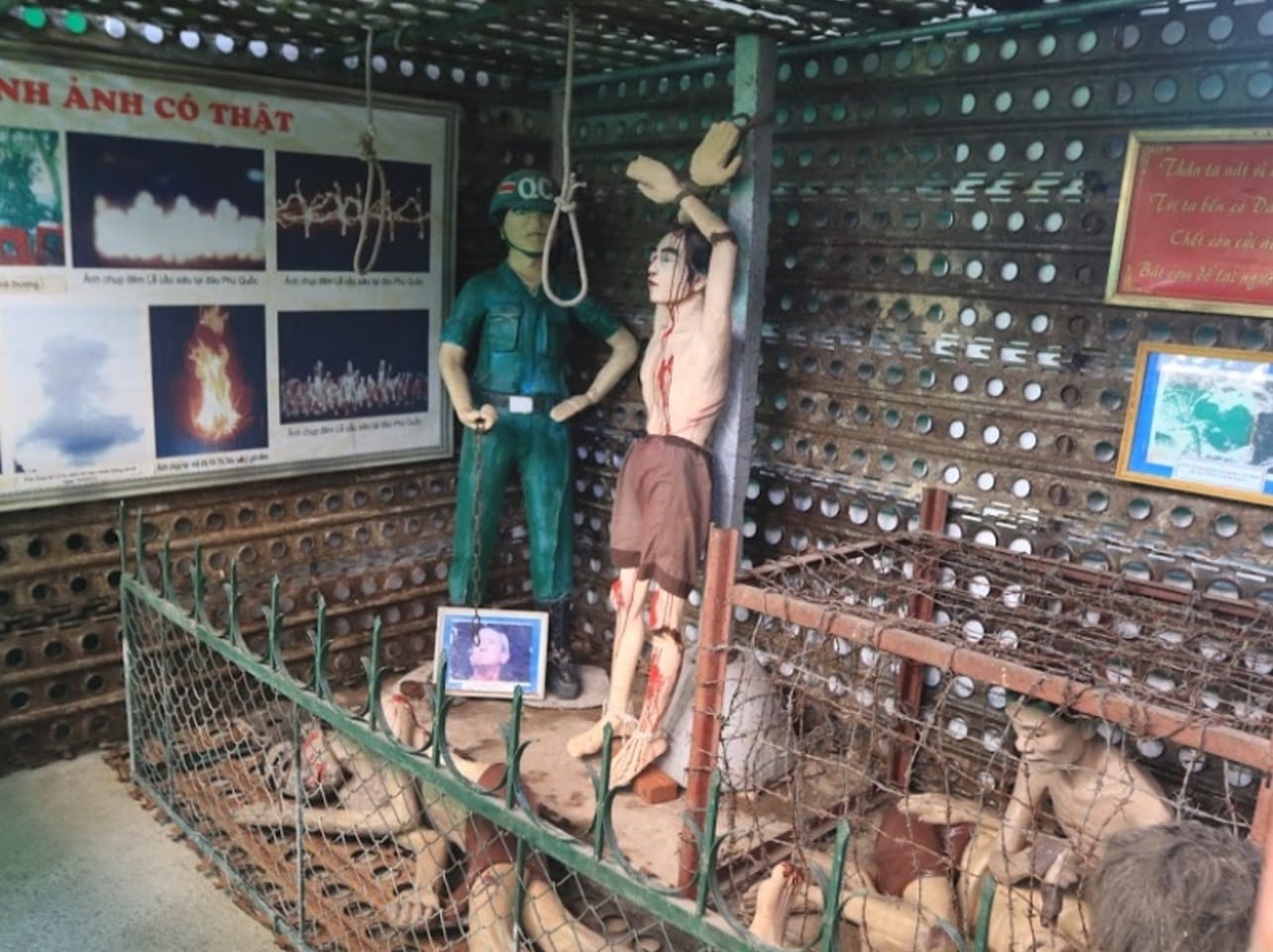
During the Vietnam War, the prison became a symbol of both immense suffering and remarkable resilience. Revolutionary soldiers and political prisoners were subjected to systematic torture using over 40 documented methods — many of which have been reconstructed in lifelike detail in Zone B2 for educational purposes.
By the war’s end, thousands of prisoners had died within the compound and many thousands more were left with permanent physical injuries. Following the Paris Peace Accords in 1973, the prisoner-of-war camp ceased operation and prisoners were repatriated. The site was later preserved and restored as a historical relic., and the site was subsequently preserved as a national memorial.
Highlights When Visiting Phu Quoc Prison
Zone B2 — Torture Reenactments
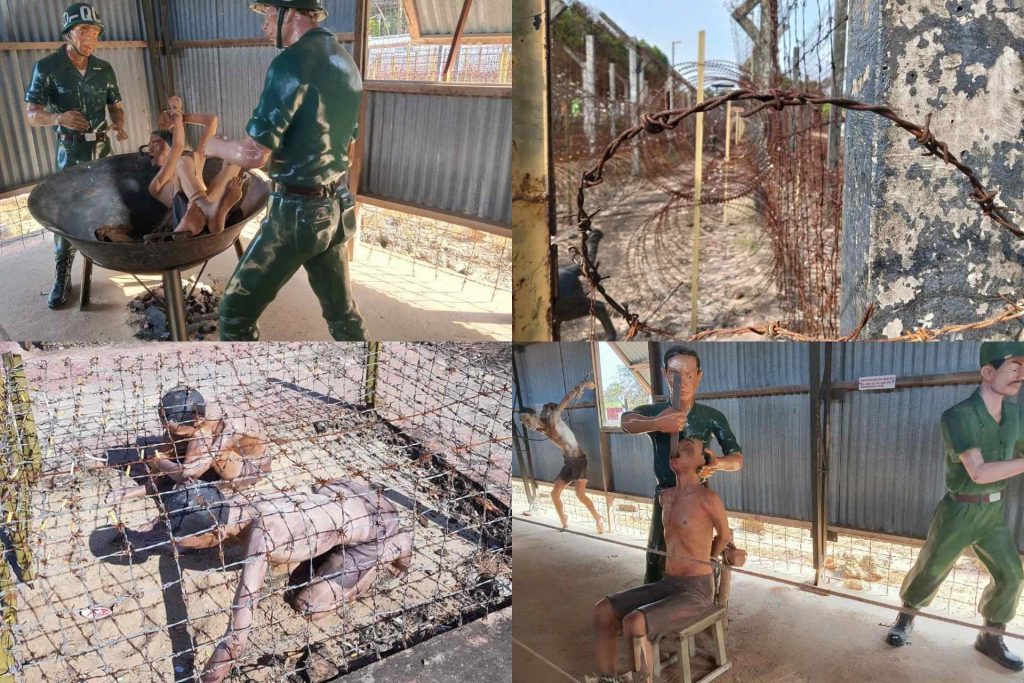
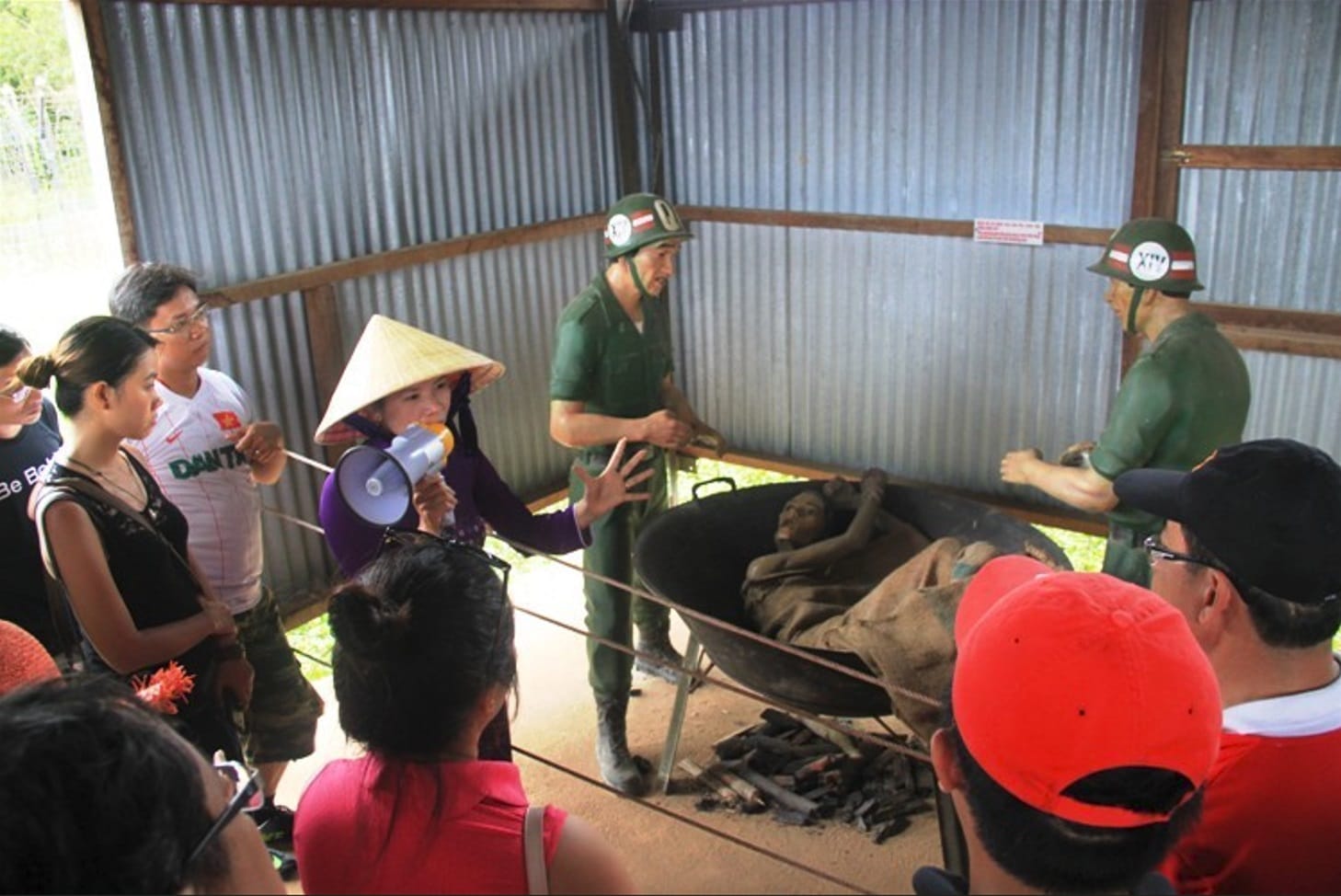
Zone B2 covers over 17,000 square meters and is the most emotionally intense section of the prison complex. This area contains the most detailed and graphic reconstructions anywhere in Vietnam of the torture methods used on prisoners — including barbed-wire cage confinement, nail insertion, and stingray-tail whipping.
The reconstructions are deliberately realistic. For many visitors — particularly those with a personal or family connection to the Vietnam War — Zone B2 provokes deep emotion. Approaching this section with quiet respect for the people whose suffering it represents transforms the experience from spectacle into genuine remembrance.
The four most documented torture methods on display include:
- Barbed wire cages: Prisoners confined in cages measuring just 2 metres long by 0.5 metres wide, stripped, starved, and rendered immobile for days at a time — considered among the most dehumanising methods used
- Nail insertion: Metal nails of 3–8 cm driven into limbs, joints, shoulders, and the skull to break prisoners’ resistance and inflict permanent injury
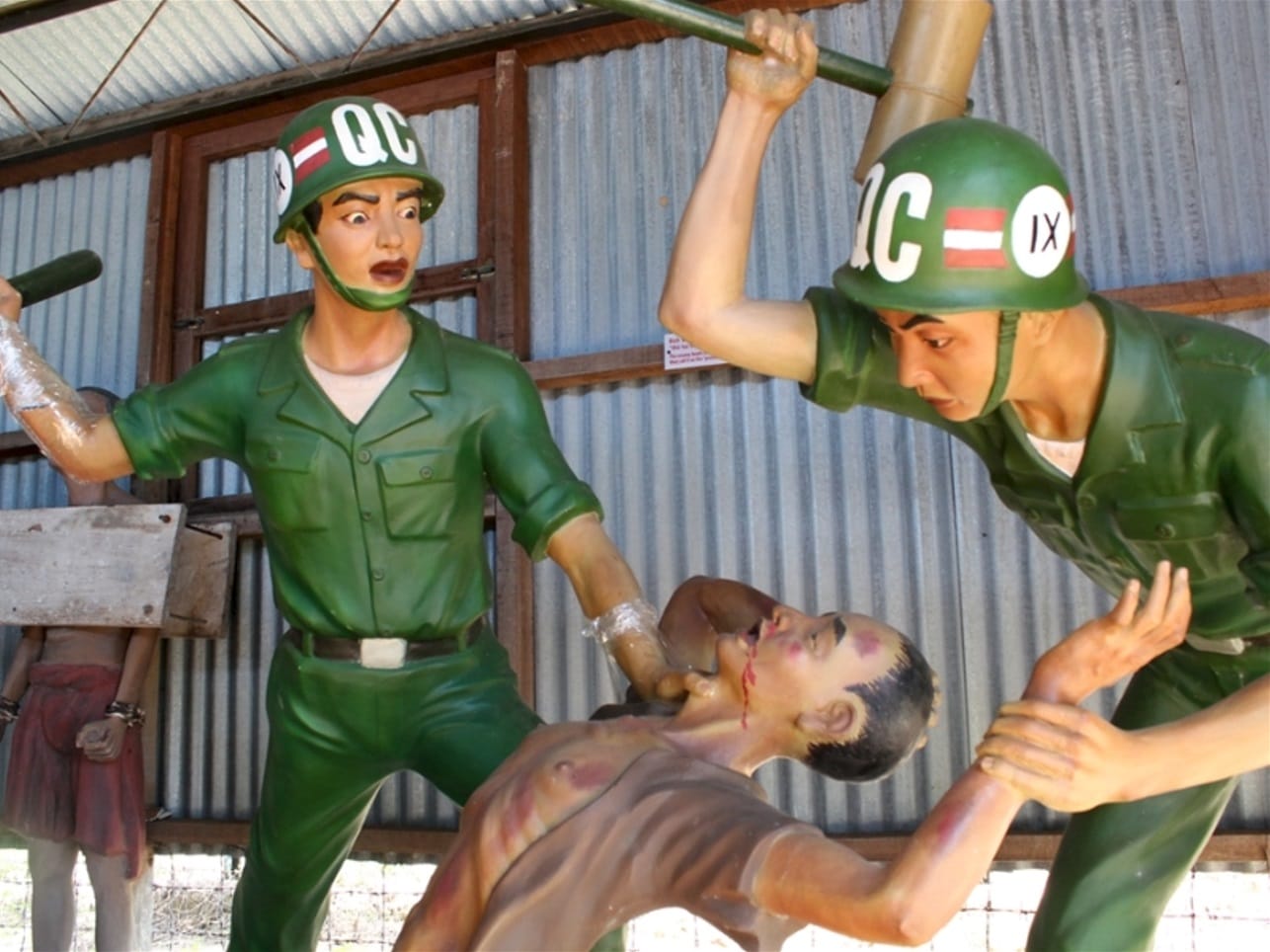
- Tooth extraction by hammer: Prisoners kneeled and restrained while guards used iron rods and hammers to shatter teeth — a method designed for maximum pain and psychological terror
- Stingray-tail whipping: Prisoners stripped and bound while guards used dried stingray tails to lacerate exposed flesh — drawing blood and tearing skin with each strike.
Beyond these four, Zone B2 reconstructs dozens of additional methods including waterboarding, live burial, and burning — presented not as entertainment but as historical testimony to what thousands of prisoners endured.
The Phu Quoc Prisoned Martyrs Memorial
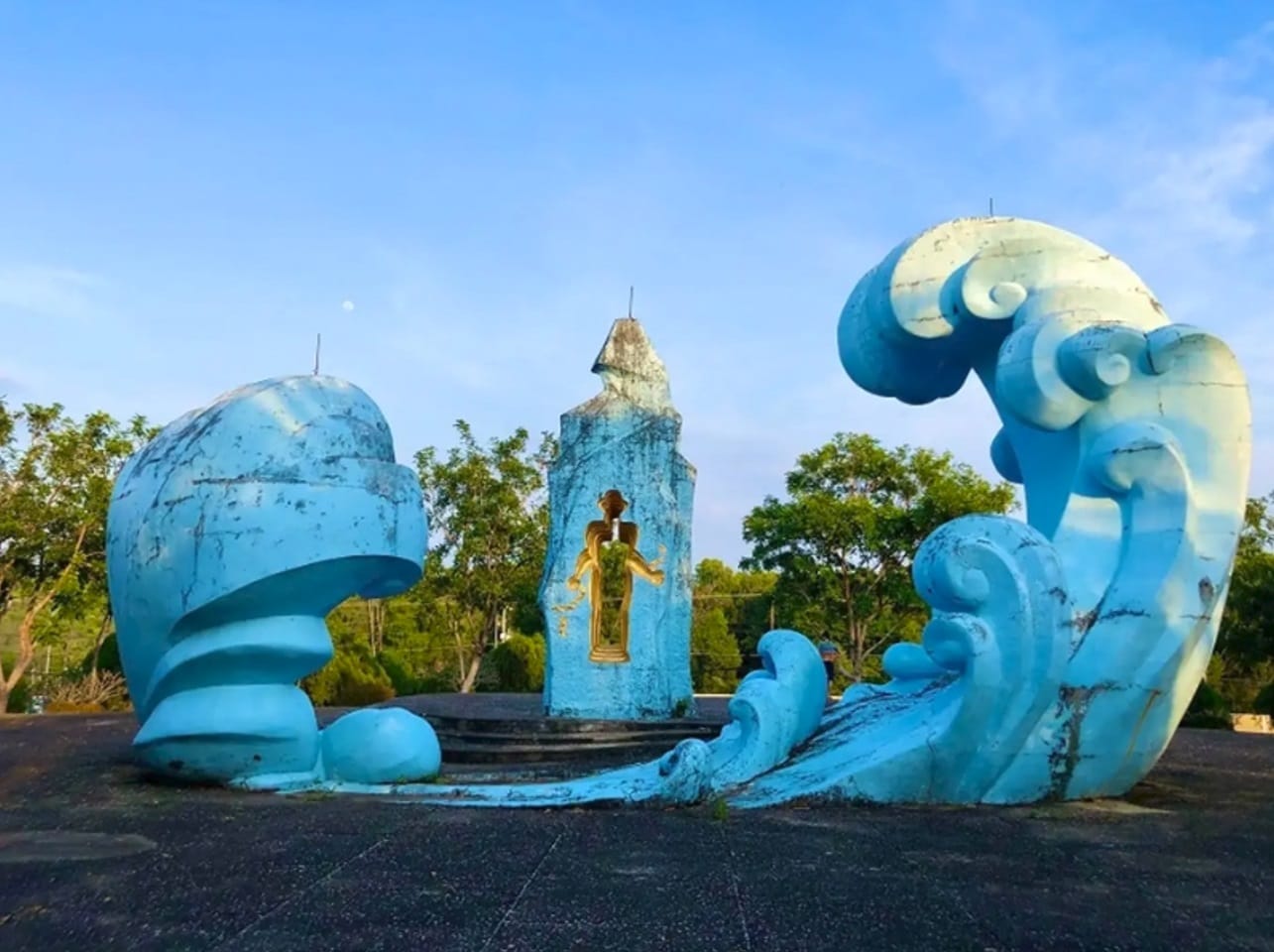
After moving through Zone B2, most visitors find the Martyrs Memorial the most emotionally significant stop on the site. Built in 2013, the memorial spans 12,420 square meters and was designed with deliberate architectural symbolism.
Two waves rising 5 metres high flank a central hollow pyramid approximately 2 metres deep — a structure whose design concept translates as “The People Who Emerged from That Place”, representing the indomitable spirit of those who survived, and honouring those who did not. Over 500 soldiers are commemorated here by name, having died within the prison’s walls due to torture and inhumane treatment.
Visitors are welcome to pay their respects at the central monument. Incense is available, and a quiet atmosphere is maintained throughout the memorial area.
Historical Relics and Exhibition Areas
Beyond Zone B2 and the memorial, several other significant areas merit time during your visit.
Prisoner Graveyard: Covering approximately 2,000 m² and located about 1 km from Zone B2, the graveyard is laid out in a circular design centred on a monument shaped like a raised fist — symbolising the resilience and unbroken will of Vietnamese prisoners even in death.
Kien Van Church: Once spanning around 4,000 m², this church served as an important structure within the colonial-era compound. Today only concrete ruins remain — a silent architectural witness to the site’s layered history.
Exhibition House: Two connected rooms display the prison’s development chronologically, with preserved artifacts, over 100 photographs, and documentation of the conditions and treatment endured by revolutionary prisoners across both the French and American war periods.
Monument at Doi Sim: Standing approximately 5 metres tall, this figure depicts a person emerging between two waves — echoing the martyrs’ memorial theme of emergence, endurance, and the refusal to be broken.
How to Get to Phu Quoc Prison
Phu Quoc Prison is located approximately 28–29 km south of Duong Dong town, near An Thoi port at the southern tip of the island. The journey takes around 30–40 minutes from central Duong Dong depending on traffic.
For a full overview of island transport options, see our transportation in phu quoc guide.
Getting There from Duong Dong
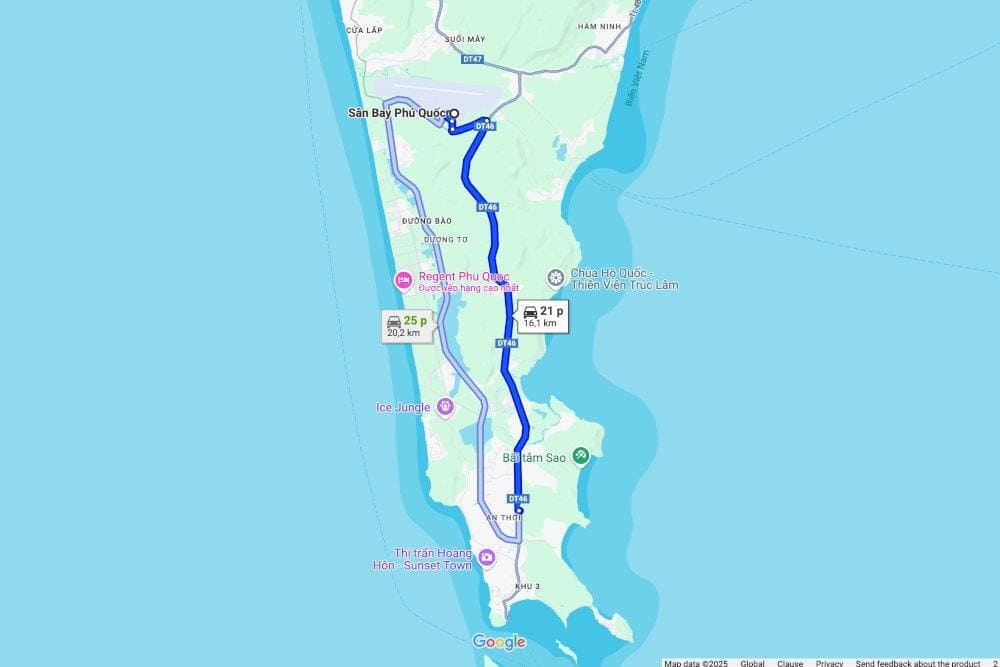
The most direct route by motorbike or car follows Tran Hung Dao Street south, passing through Duong To and continuing along the coast road toward An Thoi. The prison is clearly signposted from approximately 5 km out.
Step-by-step directions:
- Start on Cach Mang Thang 8 Street in Duong Dong
- Turn left onto DT45 Road and continue straight south
- At the T-junction near Dien May Phu Quoc, turn left onto DT47 Road
- At Ham Ninh roundabout, turn left onto DT46 Road
- Continue approximately 16 km — Phu Quoc Prison is on the left
Transport Options
By motorbike rental: The most popular option for independent travellers — flexible, affordable, and scenic along the coastal road. Rentals are available from most guesthouses and hotels on the island from around 150,000–200,000 VND per day.
By taxi or ride-hailing app: Comfortable for families and couples who prefer not to ride. A one-way fare from Duong Dong to the prison costs approximately 150,000–200,000 VND with Vinasun or Mai Linh. Ride-hailing apps (Grab, Xanh SM) are available and typically slightly cheaper.
By private car or resort transfer: Guests staying at Corona Resort & Casino Phú Quốc can arrange a private vehicle through the concierge, combining the prison visit with Ham Ninh Fishing Village, a phu quoc waterfall stop, or a ho quoc pagoda visit for a complete southern island day.
By public bus (Route 10): Available from Duong Dong at approximately 15,000 VND per person, though schedules are limited and not ideal for timed visits.
Important Notes for Visiting Phu Quoc Prison
Phu Quoc Prison is a solemn site of national remembrance. A few practical guidelines ensure your visit is respectful, comfortable, and genuinely worthwhile.
Dress and Conduct
Wear modest, respectful clothing — avoid revealing beachwear, sleeveless tops, or shorts that would be inappropriate at a formal memorial. Maintain a quiet demeanour throughout, particularly in Zone B2 and near the martyrs’ memorial. Loud conversation, running, or disruptive behaviour is considered deeply disrespectful to both the site and other visitors.
Photography
Photography is permitted throughout most of the complex. However, some areas — particularly the interior of the exhibition rooms and near the martyrs’ memorial — request that visitors refrain from flash photography or filming. Follow posted signage and ask staff if uncertain. Never photograph in a manner that trivialises or sensationalises the torture exhibits.
Visiting with Children
This site is not recommended for young children due to the graphic and realistic nature of the torture reconstructions in Zone B2. Older teenagers (14+) studying history may benefit from a guided visit with adult accompaniment and appropriate contextualisation before and after.
Practical Tips
- Timing: Arrive before 9:30 AM to have the morning session to yourself — tour groups from resort packages typically arrive between 10:00 and 11:00 AM
- Sun protection: The outdoor sections of the site offer limited shade — bring sunscreen, a hat, and sunglasses, particularly between April and October
- Wet season preparation: During the phu quoc rainy season (May–October), a compact umbrella or light raincoat is essential for the outdoor areas between buildings
- Guided tours: An optional local guide (available at the entrance gate) provides historical context significantly beyond the English-language signage, and is strongly recommended for first-time visitors
- Combining with other stops: With 1.5–2 hours at the prison, a well-planned southern day trip can also include Ham Ninh Fishing Village, a waterfall, and Ho Quoc Pagoda — all within reasonable distance
FAQ
Where is Phu Quoc Prison located?
Phu Quoc Prison is at 350 Nguyen Van Cu Street, An Thoi Ward, Phu Quoc City, An Giang Province — approximately 28–29 km south of Duong Dong town. The site spans over 40 hectares across four zones: A, B, C, and D.
Is there an entrance fee for Phu Quoc Prison?
No. Admission is completely free for all visitors, both domestic and international. The site is operated as a national historical museum under Special National Historical Site status, recognised by Vietnam’s Ministry of Culture and Information since 1995.
What are the opening hours?
The prison opens daily in two sessions: 8:30 AM to 11:30 AM and 1:30 PM to 5:00 PM. It closes for a lunch break between 11:30 AM and 1:30 PM — plan your arrival to fall within one of the open sessions.
How long does a visit take?
Most visitors spend 1 to 2 hours exploring the full site, including Zone B2, the martyrs’ memorial, the exhibition house, the prisoner graveyard, and the outdoor reconstructions. A guided tour with historical narration typically adds 30–45 minutes.
How do I get there from Duong Dong?
By motorbike or car, follow Tran Hung Dao Street south and continue along the coast road toward An Thoi — approximately 30–40 minutes. By taxi, expect 150,000–200,000 VND one way. Guests of Corona Resort & Casino Phú Quốc can arrange a private resort transfer through the concierge.
Is Phu Quoc Prison suitable for children?
Young children are generally not recommended due to the graphic torture reconstructions in Zone B2. Older teenagers (14+) with a historical interest may find the visit impactful and educational when accompanied by adults.
What should I wear?
Wear respectful, modest clothing — no beachwear, revealing tops, or shorts that would be inappropriate at a formal memorial. Bring sun protection and an umbrella during the rainy season for the extensive outdoor sections.
Can I combine this visit with other attractions?
Yes — most travellers combine Phu Quoc Prison with Ham Ninh Fishing Village, a pepper or fish sauce factory, and either a waterfall or Ho Quoc Pagoda for a full southern island day. For a complete overview of island experiences, our things to do in phu quoc guide covers all major attractions by area.
We hope this guide helps you plan a respectful, well-prepared visit to the Phu Quoc Prison historical site, including its key exhibits, memorial areas and practical visitor information.
If you are looking for a comfortable base from which to explore the island’s history and its beaches, Corona Resort & Casino Phu Quoc on Bai Dai Beach offers resort stays, dining and entertainment, with concierge transfers to southern-island sites like Phu Quoc Prison.
Contact Corona Resort & Casino Phu Quoc:
- Location: Bai Dai Area, Phu Quoc Special Zone, An Giang Province, Vietnam
- Phone: +84 297 222 8888
- Email: mkt.management@casinocorona.vn
- Website: https://casinocorona.vn/en/